
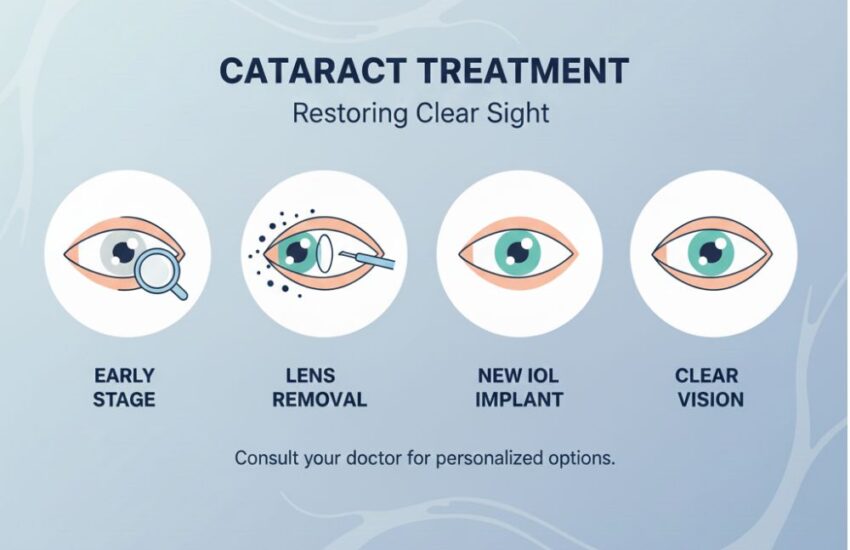
Cataracts are one of the most common and treatable eye conditions affecting adults and senior citizens. With rapid advancements in ophthalmology, cataract treatment in 2025 has become safer, faster, and more precise than ever. If you or your loved one is experiencing blurred vision, glare, or difficulty reading, understanding the options available today can help you make an informed decision.
This guide covers the latest cataract surgery technology, symptoms, treatment types, and costs in India, along with expert recommendations.
What Is a Cataract?
A cataract occurs when the natural lens of the eye becomes cloudy due to ageing, UV exposure, medical conditions (like diabetes), or injuries.
This clouding blocks light from reaching the retina, causing gradual vision loss.
Cataracts do not improve on their own, and glasses cannot reverse the condition—surgery is the only effective treatment.
Common Symptoms of Cataracts
Recognising the early signs can help you seek timely treatment:
- Blurred or cloudy vision
- Difficulty seeing at night
- Increased sensitivity to light and glare
- Faded colours
- Frequent changes in eyeglass prescriptions
- Halos around lights
- Trouble reading or driving
If these symptoms worsen with time, a detailed evaluation by an ophthalmologist is essential.
Cataract Treatment Options in 2025
Modern cataract surgeries are minimally invasive, require only a few minutes, and allow quick recovery. Here are the top treatment options available in 2025:
1. Phacoemulsification (Phaco Surgery)
The most widely used method, Phaco involves:
- Creating a tiny incision
- Breaking the cloudy lens using ultrasound
- Replacing it with an artificial lens (IOL)
Benefits:
- Quick recovery
- Stitch-less procedure
- Fast visual improvement
2. Micro-Incision Cataract Surgery (MICS)
A more advanced version of Phaco performed through an even smaller incision (1.8–2.2 mm).
Benefits:
- Less corneal damage
- Faster healing
- Reduced post-surgery discomfort
3. Femtosecond Laser-Assisted Cataract Surgery (FLACS)
One of the biggest advancements for 2025, this technique uses laser precision to:
- Create incisions
- Break the cloudy lens
- Improve intraocular lens (IOL) positioning
Benefits:
- High accuracy
- Better visual outcomes
- Lower risk of complications
This is ideal for patients seeking premium results.
Advanced Lens Options (IOLs) in 2025
The success of cataract surgery depends heavily on choosing the right lens. In 2025, these IOLs offer excellent clarity:
1. Monofocal IOLs
- Clear distance vision
- Cost-effective
- Most commonly used
2. Multifocal IOLs
- Clear vision for distance, intermediate, and near
- Reduces dependence on glasses
3. Trifocal IOLs (Latest)
- Even better near, intermediate & distance vision
- Ideal for active lifestyle patients
4. Toric IOLs
- Best for patients with astigmatism
- Improves overall clarity
5. EDOF IOLs (Extended Depth of Focus)
- Smooth transition between vision ranges
- Very natural and comfortable vision
Cataract Surgery Cost in India (2025)
Costs vary depending on the hospital, city, surgeon expertise, and lens selection.
Approx. Price Range (India – 2025):
- Basic Cataract Surgery: ₹18,000 – ₹35,000
- Phaco Surgery with Standard IOL: ₹25,000 – ₹45,000
- Premium IOLs (Multifocal/Trifocal/EDOF): ₹45,000 – ₹90,000
- Femtosecond Laser Surgery (FLACS): ₹85,000 – ₹1,50,000
Insurance may cover basic surgery, while premium lenses often require additional payment.
Recovery and Aftercare
Most patients resume routine activities within 24–48 hours.
Your doctor may recommend:
- Antibiotic & anti-inflammatory eye drops
- Avoiding rubbing the eyes
- Wearing protective glasses
- Limiting screen time temporarily
Regular follow-up ensures faster healing and stable visual results.
When Should You Consider Cataract Surgery?
You should opt for surgery if:
- Vision affects day-to-day activities
- Night driving becomes difficult
- Reading becomes tiring
- Colours appear dull
- Prescription changes frequently
Modern cataract surgery is extremely safe and provides long-term visual clarity.
Take the First Step Toward Clear Vision
If you are noticing cataract symptoms or want to explore the latest treatment options, consult an expert ophthalmologist. Early evaluation ensures better visual outcomes and more lens choices.
Book Your Cataract Evaluation at Manjunatha Nethralaya
Get expert diagnosis, advanced technology, and personalised treatment from trusted eye specialists.

